THE CHALLENGE
Redefining what effective design looks like in an early-stage startup.
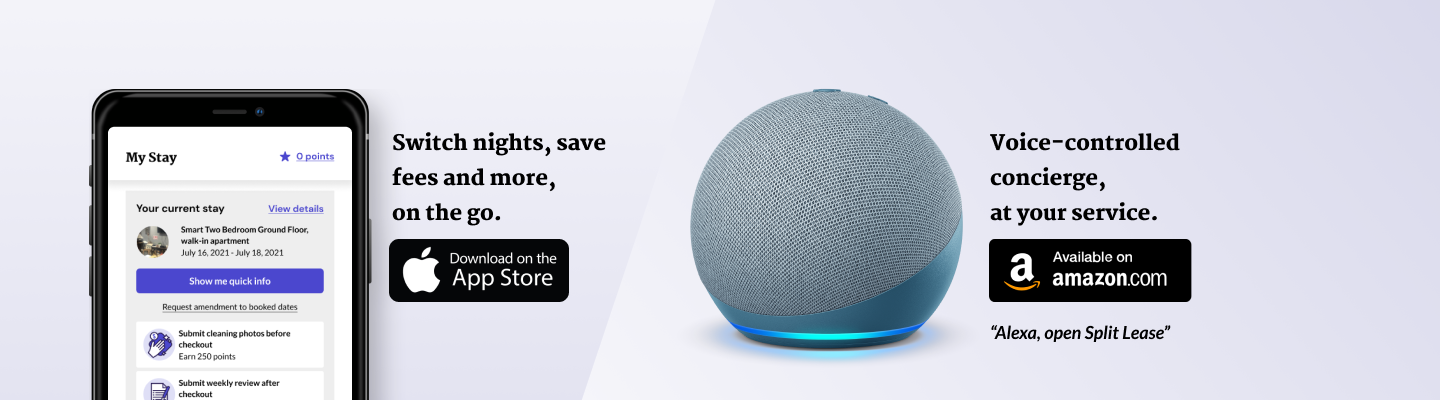
Split Lease is a part-time home-sharing marketplace for business travelers and commuters in NYC — offering a weekday place to stay to avoid long nightly commutes. When I joined, I initially focused on building a design system and refining the brand. I quickly realized those weren’t the company’s most urgent needs.
In a startup, survival depends on solving the right problem — not polishing the interface. I shifted from designing what I thought the product needed to validating what users actually needed, prioritizing rapid learning, customer conversations, and measurable business impact over visual perfection.
My role: Lead Product Designer
Product Strategy, Product Vision, User Research & Usability Testing, Product Market Fit, Build Measure Learn, Information Architecture, Visual Design, Prototyping & Testing, Pitching, Scrum, Agile & Lean, Customer Service & Interaction, CRO, CRM, Pirate Metrics
Tools: Balsamiq, Figma, Bubble.io, InVision, Hotjar, Heap.io
Duration: 12 months (2020 - 2021)
Paul Graham, founder of YCombinator:
“What you need to succeed in a startup is not expertise in startups. What you need is expertise in your own users.”
WHAT I LEARNED
Evolution Beyond a Marketplace
Over the year I spent at Split Lease, the product evolved — but more importantly, so did my approach to design.
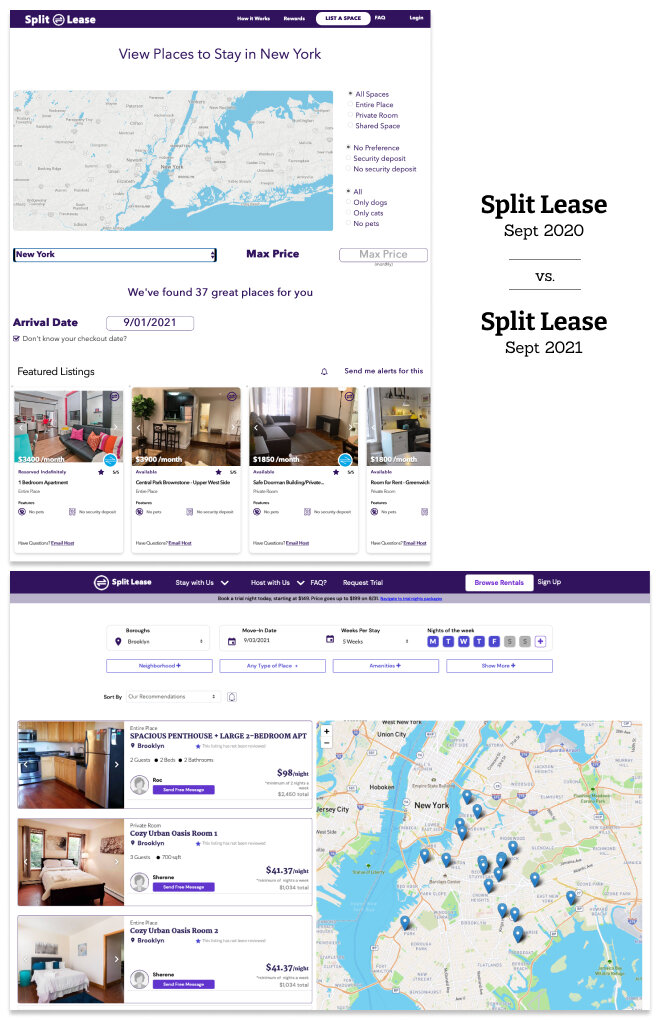
Yes, the UI improved significantly. But the real transformation wasn’t visual — it was strategic.
When I joined, the company had three years of product-market fit learnings and draft personas. My instinct was to produce quickly. I designed the first iteration of the mobile app in a single day, equating speed with impact.
That mindset shifted when I realized that a 30-minute conversation with a customer delivered more value than hours of unchecked production. Direct conversations uncovered nuanced pain points, unmet needs, and use cases other platforms weren’t solving. Those insights clarified the company’s vision far more than rapid output ever could.
Coming from traditional graphic design firms — fast-paced, waterfall-style B2B environments where output volume drove revenue — this was a fundamental shift. At Split Lease, impact wasn’t measured by how much I shipped, but by how deeply I understood the problem.
What started as a marketplace iteration became a personal evolution in how I define effective design.
The Challenges of a Startup
1. Bootstrapped Means Ruthless Prioritization
Until you’re ramen profitable or have raised your first round, every design and development decision must be intentional. We prioritized only the work that moved the business forward, timeboxed solutions to avoid overbuilding, and shipped low-scope iterations to test ideas quickly. Embracing a true build–measure–learn cycle allowed us to validate assumptions in days, not weeks. Tools like Bubble made it possible to turn a user request or complaint into a live solution by the next day — a level of speed impossible with traditional hard-coded workflows.
2. Traction Requires Balanced Network Effects
Marketplaces live and die by network effects — a classic chicken-and-egg problem. More hosts increase the chances guests will find and book a space, but limited or fully booked inventory drives guests away. Similarly, inconsistent guest demand erodes host trust.
Sustainable traction depends on balancing value for both sides: enough quality listings to attract guests, consistent demand to retain hosts, and clear benefits for everyone. Get it right, and network effects begin to grow organically; get it wrong, and growth stalls.
3. Small Teams Require Role Fluidity
As the only product designer at Split Lease, my role extended far beyond design.
In a small, truly agile team, job descriptions blur. One day I was designing flows and supporting development. The next, I was cold-calling potential hosts. The following week, I was acting as product owner and running sprint grooming. This environment required stepping into whatever role moved the company forward. It expanded my skill set beyond craft — strengthening my product thinking, communication, and leadership.
4. Focus on the Right Things That Don’t Scale
In early-stage startups, automation can be dangerous. It’s costly, time-consuming, and often premature before product-market fit is validated.
Direct, hands-on interactions with customers provide far more value. Walking users through the entire booking process by phone revealed assumptions in the product that only made sense to us, not to real users.
Doing the “manual” work early builds insight, trust, and clarity — even if it doesn’t scale — and lays the foundation for smarter, scalable solutions later.
I learned several strategies to tackle these challenges and gain control in an otherwise unpredictable environment:
Have real customer conversations to uncover true pain points and needs
Use Pirate Metrics to organize KPIs and measure performance across the business
Embrace build–measure–learn to continuously test product-market fit
Cultivate network effects to drive sustainable growth
RESEARCH
Designing with Users at the Center
No matter the size of your company, your customers should guide every decision. It’s easy to fall into the trap of designing what you think is right. Without stepping back, seeking feedback, or talking to users, you risk focusing on the wrong problems.
Empathy is essential. Real conversations with users make it easier to understand their needs and design solutions that truly work for them.
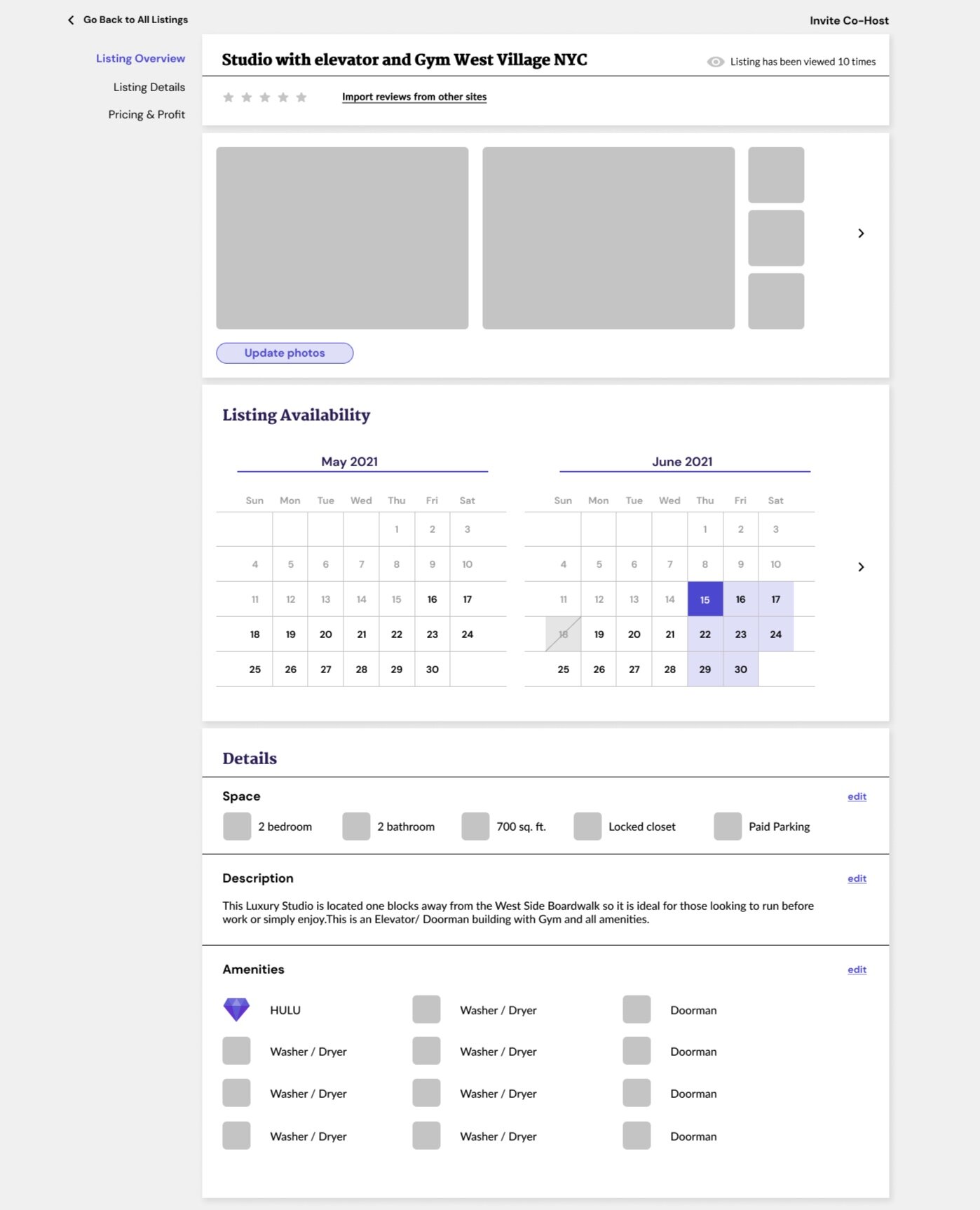
At Split Lease, hosts only engaged with our platform when a guest showed interest. Rather than relying on emails, I texted and called hosts directly whenever there was a booking request. These conversations taught me how their businesses operated and who their ideal guests were. By building rapport, I not only delivered better guest leads but also used their feedback to design a more intuitive Host Dashboard — improving both usability and host satisfaction.
BUILD MEASURE LEARN + PIRATE METRICS
“The only way to win is the learn faster than anyone else.” - Eric Ries
Build–measure–learn, popularized by Eric Ries in The Lean Startup, is a fast, continuous loop for testing ideas, minimizing risk, and validating product-market fit. Unlike traditional design processes, which can end once a feature is built, this framework lets startups iterate quickly — often in 1–2 week sprints — to decide whether to persevere or pivot.
We used Pirate Metrics (AAARRR) to guide KPIs: Awareness, Acquisition, Activation, Retention, Revenue, and Referral. As the designer, I focused primarily on awareness and acquisition, while retention was secondary in our early, high-churn marketplace.
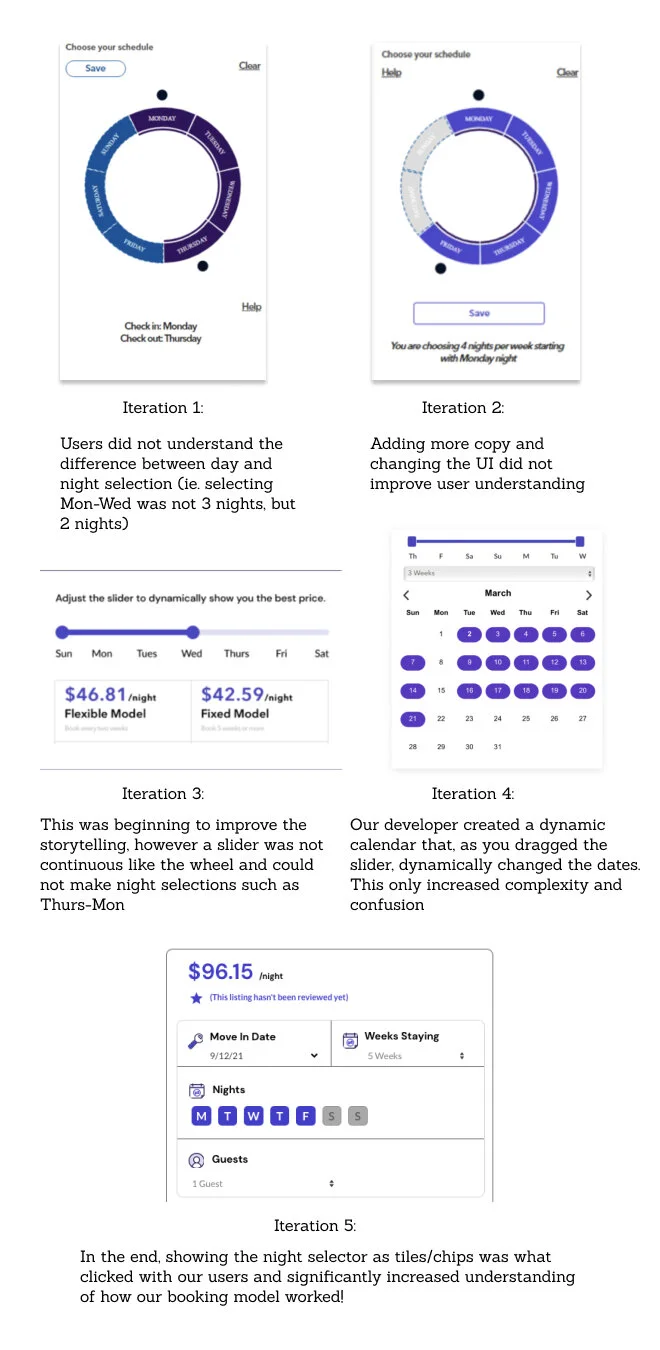
Traffic to Split Lease often assumed it operated like other homesharing platforms — users expected nightly or multi-week stays. In reality, bookings were part-time, max six nights a week. This caused extremely high bounce rates and time-on-site under three seconds.
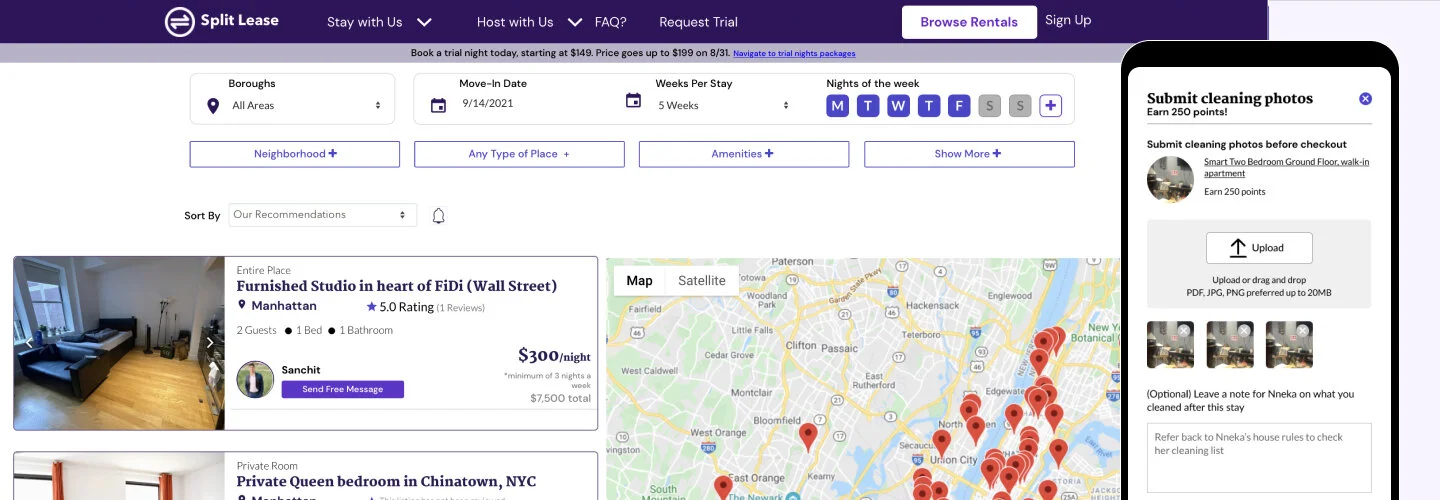
Through build–measure–learn, I iterated on the Property Search page: simplifying storytelling, clarifying the limited-night model, and replacing a confusing wheel selector with chip selections. Usability tests and Hotjar data confirmed improvements. Results included:
Average time on site: 24 minutes (up from a few seconds)
Email acquisitions: 4 per day (up from 1–2 per week)
Bounce rate: significantly reduced
NETWORK EFFECTS
Balancing Hosts and Guests
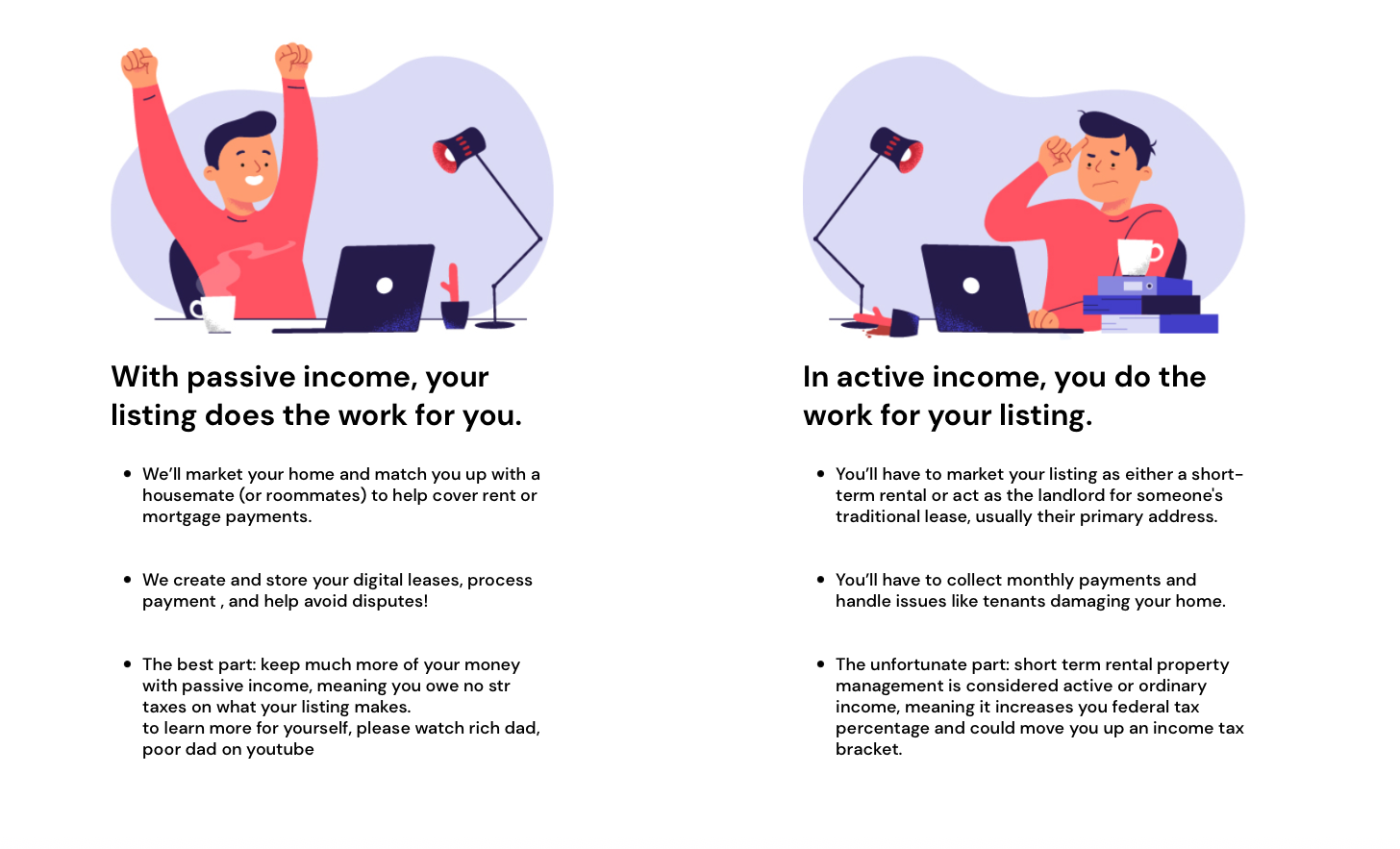
Network effects are central to any marketplace: users get more value as others join and engage. At Split Lease, this created a classic chicken-or-egg problem — we needed both hosts and guests, but it was hard to acquire one without the other.
We decided to focus on hosts first. Unlike guests, hosts had many options for listing their spaces, so each new host increased the likelihood of guest bookings. I spent time texting, emailing, and calling hosts to onboard them manually. We then marketed their listings and managed guest interest like a concierge service.
By working closely with hosts, I learned their needs, built trust, and used their feedback to improve the platform. Storytelling and clear graphics helped differentiate Split Lease from other home-sharing sites, making the value of joining immediately obvious.
How This Startup Changed Me
Working at Split Lease taught me more than startup survival — it taught me new skills and revealed strengths I didn’t know I had.
Empathy became my superpower. Interacting directly with users showed me the value of deeply understanding their needs — a skill that now guides every design decision I make.
I became more confident and vocal. Agile, high-stakes work forced me to speak up, defend design choices, and present to stakeholders — helping me overcome imposter syndrome.
Career validation. Seeing tangible results from my work confirmed that product design, solving real user problems, is my true passion.